
A familiar call of “Bingo!” can mean very different things on either side of the game table.
Someone sits down expecting the usual card, only to be handed a ticket arranged in rows and columns with blank spaces—or a stack of numbered cards unlike anything used at the last social night. Then the caller starts announcing numbers in an unfamiliar rhythm, and a neighbour wins with a pattern that was never mentioned.
Top Bingo Bonuses for October 2026

Love2Play Casino
That small moment of confusion is common because “bingo” is not a single fixed game. Housie and American bingo share the basic pleasure of matching called numbers, but their tickets, number ranges, calls, and winning targets can differ sharply. A player who assumes the name tells the whole story may mark the wrong expectation before the first number is drawn. The printed ticket and the caller’s opening instructions matter far more than the label on the event poster.
- Housie commonly uses 90 numbers; standard American bingo commonly uses 75.
- Winning may mean a line, two lines, a full house, or a named pattern—always listen for the stated target.
The quickest way to tell them apart
In everyday use, housie most often means the 90-ball game familiar in the UK, Ireland, India, and many Commonwealth settings. American bingo usually means 75-ball bingo, especially in the United States. The names are useful shorthand, not universal rules: a club, app, or charity event may use either label loosely.
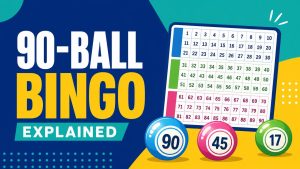
A 90-ball housie ticket typically has three rows and nine columns, with 15 printed numbers. Players may be chasing a single line, two lines, or a full house. A 75-ball American bingo card is usually a five-by-five grid headed B-I-N-G-O, with a free centre square; wins often depend on a stated line, pattern, or coverall.
For a broader view of formats, see common bingo game types. In practice, the announcement before play matters more than the name on the poster.
Check before the first call
A quick look prevents most confusion:
- Ask whether the game uses 75 or 90 balls.
- Check whether the card is a 5×5 grid or a three-row ticket.
- Listen for the exact winning target: line, pattern, two lines, full house, or coverall.
- Confirm whether numbers are called individually or through faster electronic displays.
That small check sets expectations for both the pace of play and what counts as a win.
Reading a Housie ticket
A standard Housie ticket has three rows and nine columns, but it is not a full grid. Each row contains five printed numbers and four blank spaces, for 15 numbers altogether. The blanks are part of the design, not missing print.
Columns correspond to fixed number bands, making the ticket easy to scan as calls arrive:
| Column | Numbers used |
|---|---|
| 1 | 1–9 |
| 2 | 10–19 |
| 3 | 20–29 |
| 4 | 30–39 |
| 5 | 40–49 |
| 6 | 50–59 |
| 7 | 60–69 |
| 8 | 70–79 |
| 9 | 80–90 |
A column may hold one, two, or three numbers, with the printed numbers generally rising from top to bottom. When, for example, 42 is called, attention goes straight to the fifth column rather than across every position.
The caller draws from 1 to 90. Common claims are a completed top, middle, or bottom line; the first five marked numbers; and a full house, meaning all 15 numbers on the ticket have been marked. Some games use a strip of six tickets, which together contain every number from 1 to 90 exactly once.
Reading an American bingo card
American bingo uses a square 5×5 card headed B-I-N-G-O. Its 75-ball pool is divided by letter, so a called letter is as important as the number:
- B: 1–15
- I: 16–30
- N: 31–45
- G: 46–60
- O: 61–75
The centre square in the N column is normally a free space. It begins already marked, leaving 24 printed numbers to cover. A call such as “G-52” can appear only in the G column, which makes locating it fast.
Unlike Housie’s line-based ticket, American bingo is usually won by completing a stated pattern: a horizontal, vertical, or diagonal line is common, but games may call for four corners, a postage stamp, or a full card. The pattern should be checked before play begins; the same card can be a winner under one rule and not another.
Winning patterns change the pace
Prize rules are where the two games feel most different at the table. In housie, several prizes may be available from the same ticket, so an early number can matter even after another player has already won something.
Housie builds toward a full ticket
A typical housie session calls for staged achievements: first line, second line, third line, and full house. A line means all five printed numbers in one horizontal row have been marked; the full house requires every number on the ticket. Local rules vary—some venues award only a first and full house, while others add early-number prizes—so the caller’s opening announcement is worth listening to closely.
The practical habit is simple: after each call, scan the relevant row as well as the whole ticket. A ticket with four marks in one row deserves attention immediately, but a scattered set of marks can still be promising for the full house. This staged structure is central to the multi-line differences between housie and bingo.
American bingo follows the announced target
In American bingo, the caller or display normally names the winning condition before play begins: perhaps a horizontal, vertical, or diagonal line, then a later game requiring a particular shape. The free centre square counts as already covered, making some targets quicker than they first appear.
Special patterns can be literal shapes—four corners, a postage stamp block, an X, or a frame around the card. They should be checked against the exact displayed diagram rather than guessed from the name. A “blackout” or “coverall” is the closest counterpart to a housie full house: every numbered square on the card must be covered.
From the first call, housie players watch for progress across rows and the eventual full ticket. American bingo players keep the announced pattern in view and mark only the squares that advance that shape. In either game, a claim should be made promptly, then verified before the next prize is awarded.
Calls shape the room
American bingo callers commonly use a direct coordinate and number: “B-12” or “G-55.” The letter tells players exactly where to look, while the number confirms the square. At a brisk session, that compact format keeps attention on the card and the next call.
Housie calls can be just as plain—“22” is enough—but some hosts add traditional nicknames such as “two little ducks, 22.” These sayings are optional, vary by region, and may be absent from modern halls and online games. They add personality rather than changing the rules: players still mark the number itself.
That distinction can make a Housie room feel more conversational, especially when the caller pauses for a familiar phrase or the crowd joins in. It should not be treated as a guarantee, though. A fast commercial session may call bare numbers, while an American bingo fundraiser may have a lively caller, jokes, and plenty of chat.
Before buying extra tickets or cards, note the caller’s speed, whether calls are repeated, and how wins are checked. Those details matter more than the game’s name when judging how manageable a session will feel.
More tickets, more to track
Housie players often hold several tickets or a strip containing multiple faces. Since numbers are spread across sparse rows, the task is to scan quickly and avoid missing a mark while watching for an early line, then two lines, then a full house. More tickets can improve coverage, but they also make a rapid caller harder to follow.
American bingo cards are denser and organized around the B-I-N-G-O columns. A single card is usually easy to read; several cards become demanding when the announced pattern is unusual or when the free centre affects the route to a win. Paper cards require daubing, while digital platforms may highlight or automatically mark calls.
Atmosphere follows the setup as much as the format. A social Housie night may be noisy and playful; a quiet bingo hall can feel highly focused. Conversely, an online Housie game may move faster than a relaxed American bingo event. The useful expectation is not that one game is always slower or friendlier, but that calling speed, ticket quantity, marking method, and host style set the real rhythm.
The name on the game is not the rulebook
Housie commonly refers to 90-ball, three-row ticket play, but local hosts can alter prizes, calls, and ticket sales. “American bingo” often means 75-ball B-I-N-G-O cards, yet 90-ball games are played in the US too.
The host’s rules beat the regional label. Checking the ball range and card layout prevents arriving with the wrong expectations.
A Housie session may build through early-five, one-line, two-line, and full-house prizes. A 75-ball game might pay for a letter, frame, four corners, or another displayed pattern.
Players should look at the announced winning shape before marking begins; a nearly full card may be irrelevant in a pattern game.
It usually means covering every required number, but a 75-ball blackout and a 90-ball full house use different cards, number pools, and calling progressions.
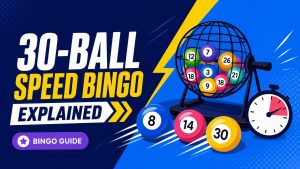
The shared word can hide very different odds and pacing. Speed bingo adds another shift: 30 balls and a compact ticket make rounds much shorter.
Five details worth checking at the desk
-
Ask which game is being played
Confirm the ball range and ticket style: 90-ball Housie, 75-ball American bingo, or a local variation.
-
Check the winning order
Find out whether prizes go to early rows, a full house, a single line, a named pattern, or blackout. The same card can play very differently under each format.
-
Confirm what each purchase covers
A Housie ticket book may cover several games, while bingo cards may be sold per round or session. Extra cards only help when they are valid for the rounds being played.
-
Learn the claim rule
Ask when a win must be called and whether play stops for verification. A late shout can matter in a fast room.
-
Choose a manageable number of cards
Start with enough tickets to follow comfortably at the caller’s pace. More entries are not useful if numbers begin to slip past unmarked.
Where house rules are unclear, the host or caller is the best source before play begins.
The right details make the game familiar
- The announced prize pattern matters more than the game’s name.
- A small, manageable set of cards is often the better first choice.
Housie and American bingo share the pleasure of listening, marking, and hoping for a timely call, but their tickets and prize targets set different rhythms. Checking the format, winning pattern, and claim procedure beforehand removes most first-session uncertainty.
Local sessions may adjust almost any detail. A quick question to the host is sensible, especially before buying extra tickets or cards.
Top Bingo Bonuses for October 2026