
A busy ticket can look like a winner before the game has actually produced one.
A number is called, the pen comes down, and several rows on a ten-line sheet suddenly look tantalisingly close. One card may have a full line; another may now show a corner pattern; a third may be one number short of a house. The instinct is to scan the whole sheet for anything that looks complete.
Top Bingo Bonuses for October 2026
But bingo does not reward the fullest-looking ticket. It rewards the ticket that meets the current calling condition on that exact number. If the game is paying for one line, a completed two-line card is not automatically the relevant claim unless it also has a valid line. If the call is for a full house, even nine marked numbers in every row count for nothing until all required numbers on one card are present. Near-wins create excitement, not entitlement.
- A claim normally has to include the most recently called number.
- Different cards on the same sheet cannot usually be combined to make one winning pattern.
A Ten-Line Ticket Is Usually Ten Separate Chances
- Ten-line ticket
In most halls and online rooms, this means a strip, book, or bundle containing ten individually playable lines. It does not mean that all ten must be completed before any prize can be claimed.
- Playable line
Each line is checked against the current game’s pattern—such as one line, two lines, full house, or a named shape. A win on one line can be valid even when the other nine are barely marked.
- Card or face
Some games call each unit a card or face rather than a line. In 75-ball bingo, the equivalent may be ten separate cards, with each card judged on its own pattern.
- Book or strip
A book often groups several lines for convenience, and a strip may be designed to spread numbers across a range. Those formats can make coverage feel different, but they do not automatically create a “complete every line” prize.
Marking the call without mixing lines
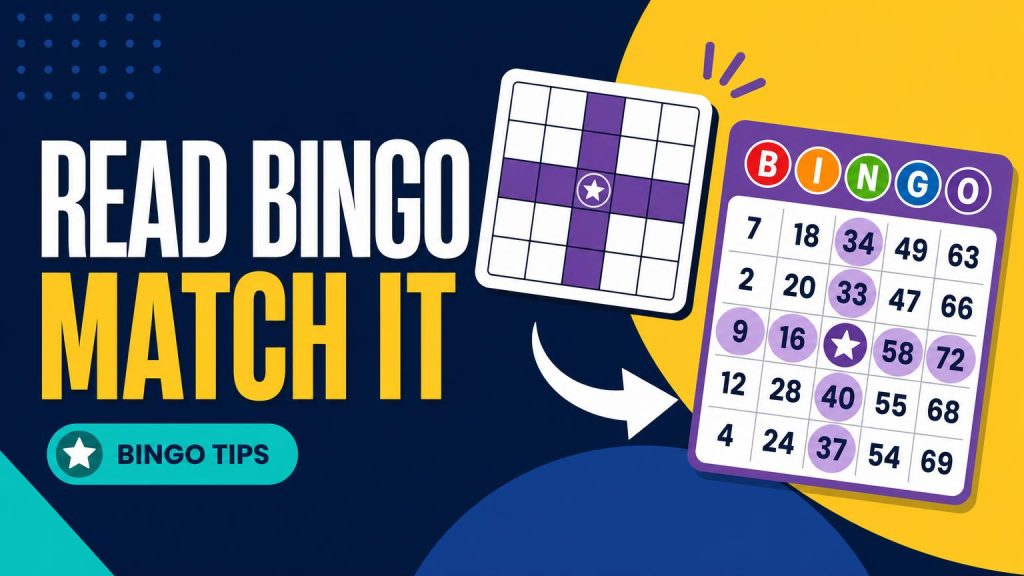
When a number is called, it is crossed off wherever it appears on the sheet. A ten-line ticket may therefore show the same called number marked in more than one row—but that does not join those rows into one larger entry.
In standard 90-ball play, each individual line is a three-row card with 15 numbers arranged under nine number columns. The columns help players spot the call quickly: 1–9 in the first, 10–19 in the second, through to 80–90 in the last. A short refresher on the way 90-ball bingo is played can make the layout easier to read at speed.
Check the active target on every card
After marking the call, each card is checked separately against the prize currently offered. For a one-line prize, only one horizontal row on one card must be complete. For a two-line prize, two completed rows must be on that same card. For a full house, all 15 numbers on one card must be marked.
For example, one card might need 34 to finish its top row while another needs 57 to finish its middle row. If 34 is called, the first card may qualify; the marked numbers on the second card cannot supply anything it lacks. The practical habit is simple: mark first, then scan every card for the current prize condition, rather than adding progress across the sheet.
For multi-line tickets, look for a completed row or card—not the largest total of marked numbers across the bundle.
From one line to full house
In familiar 90-ball bingo, prizes often progress through three targets on a single ticket: one line, two lines, and full house. The caller may offer all three in one game, or a venue may run only selected stages.
A one-line win means every number in any one horizontal row of that ticket has been called. A two-line win means two complete horizontal rows on the same ticket. They do not have to be adjacent, but they cannot be borrowed from another card in a ten-line bundle.
A full house means all 15 numbers on that one ticket are marked. It is sometimes called “house” or “coverall,” though local wording varies.
Read the target with the ticket rule
Prize labels tell players what must be completed; the game rules tell them where it must happen. Thus, “two lines” normally requires two finished rows on one ticket—not one line each on two tickets. Likewise, a card that is close to a full house does not qualify for a line prize unless one of its rows is fully complete.
The practical check is simple:
- For one line, inspect each row separately.
- For two lines, confirm two fully marked rows on the same card.
- For full house, confirm every numbered square on that card.
If a game advertises a special combined-ticket or pattern prize, its stated rules override this usual progression.
When more than one ticket wins
One called number can finish more than one result at once. For example, if 42 completes a line on one card and a second line on another, both cards may qualify—provided that prize stage is still open and the venue allows multiple claims from the same player.
The important distinction is between separate qualifying cards and one card progressing through stages. A card that makes two lines does not normally create two separate one-line prizes; it has reached the two-line condition. By contrast, two different cards can each have a valid one-line claim on the same call.
Every qualifying result should be declared. Some halls record all valid claims; others pay only one prize per player, per call, or per ticket bundle. Online games may register results automatically, but the published game rules still decide whether prizes combine, cap, or roll down.
When claims collide
If several players call at once, play usually pauses for verification. Staff or the system checks the ticket number, marked numbers, prize stage, and the last number called. A completed pattern that existed on an earlier call but was not claimed in time may be refused under the venue's rules.
When two or more valid tickets share a prize, the payout is commonly divided equally, though fixed-prize games may award each winner in full. The posted rules—not who called first—settle the outcome.
For paper bingo, leave all qualifying cards on the table until the check is complete. Calling each valid card avoids losing a separate prize through a missed claim.
More cards widen coverage, not certainty
A ten-line bundle gives ten separate chances to hold the numbers needed for the active prize. That can make a session feel less sparse: when 42 is called, it may appear on several cards, and more cards can place more lines within reach. It does not turn any near-complete card into a likely win, nor does it guarantee a larger return.
Practical value depends on what the room is playing for:
- Ticket price: Ten cards cost more than one, so any extra coverage has to be weighed against the larger stake.
- Prize design: A fixed full-house prize may be shared among winners; a per-winner prize works differently. Small line prizes can also change the appeal of a bundle.
- Player count: More competing cards in the room generally means more chances that another player completes the same condition first or on the same call.
- Number repetition: A bundle with repeated numbers offers less variety than one spread across more of the 90-ball range. Repeats are not bad—they simply mean several cards rely on the same calls.
The sensible reason to buy more cards is broader participation in the draw, not an expectation that the payout will follow. Checking the session’s price, prize rules, and sharing terms before play gives the clearest picture.
One call, one card at a time
-
The number is called
In a 90-ball game, the caller announces 62. The player checks all ten tickets and finds 62 on ticket 4 and ticket 9, so both squares are marked.
-
Ticket 4 makes a valid line
Before 62, the middle row on ticket 4 already had its other four numbers marked. That row now contains all five numbers, making ticket 4 a one-line winner if one line is the active prize.
-
Ticket 9 does not add to it
Ticket 9 may have four marked numbers in a row, but its missing number is not supplied by ticket 4. Marks from separate tickets never complete a shared row.
-
Play continues for the next prize
After the one-line result is checked, later calls are judged against the new condition, such as two lines. Ticket 4's completed row remains useful only on that same ticket.
-
A later call creates a separate result
When 18 is called, ticket 9 completes one of its own rows. If the active prize is still one line, it can qualify separately; if play has moved on, it must meet the current condition instead.
Exact claim and prize rules vary by game.
Four claims that cause avoidable disputes
Usually, no. A ten-line pack is normally ten separate tickets, not a ten-line challenge.
Only a published game rule can create a bonus for clearing a whole pack. Standard prizes remain tied to the qualifying ticket and the active stage.
No. The required rows must be on the same ticket unless the organiser explicitly says otherwise.
Marks across a pack can look like one large game board, especially near the end. Prize validation still checks one ticket at a time.
The amount may be guaranteed, shared among simultaneous winners, or set by the venue or game provider.
The displayed prize information and local rules settle the amount. A valid call establishes eligibility, not necessarily a solo payout.
A call must be verified against the numbers drawn and the current prize condition.
A fast shout can stop the game for checking, but it does not override an incorrect mark or an earlier valid claim. Multi-line wins in 75-ball games may use named patterns rather than the familiar 90-ball row stages.
Check these details on the game notice
-
Identify what counts as a winning unit
Look for whether a prize applies to one ticket, a particular strip, or the whole book. A ten-line purchase is not automatically a ten-line pattern.
-
Read the prize sequence
Confirm which prizes are live: one line, two lines, full house, or a special pattern. Earlier prizes may be closed once the caller moves on.
-
Check the claim deadline
Some games require an immediate call of “bingo”; others allow staff to verify a ticket after the draw. The notice should say which applies.
-
Find the tie rule
A shared prize, a fixed amount per valid ticket, and a roll-over are very different outcomes when two cards complete on the same number.
-
Ask before play if wording is unclear
A quick question to the caller or venue staff is safer than assuming that “line” means the same thing in every session.
Treat the notice as the final referee
- Count completed patterns on the unit named by that game’s rules.
- Check the active prize and the winning call before making a claim.
- Expect simultaneous valid cards to be handled under the stated tie policy.
A ten-line ticket commonly gives several separate chances, not one large pattern to assemble. Marks may appear across the pack, but a winning line, two-line result, or full house normally has to exist on the required individual ticket.
Terms such as line, ticket, and claim can vary between operators. Every claim is judged against the published notice for that particular game.